
Why Has My Skin Suddenly Gone Crazy? The Real Reason Your Skin Is Dry, Sensitive, Spotty and Irritated
Share
Your skin was perfectly fine. Then suddenly you're 35, your cheeks are dry, your chin has spots, everything stings and the moisturiser you've used for years has apparently decided to betray you.
Sound familiar?
One minute you're happily getting on with your skincare routine.
The next you're Googling:
Why is my skin suddenly so dry?
Why am I getting acne in my 30s?
Why does everything make my skin sting?
How do I repair my skin barrier?
Why do I have oily skin AND dry skin?
And then, naturally, you end up buying three new serums, an exfoliating acid, a retinol and something containing the word “glow”.
Your skin then files a formal complaint.
I know because I've been there.
And after years of researching skincare and formulating products, I've become increasingly convinced that we've made skincare far more complicated than it needs to be.
Sometimes your skin doesn't need another active ingredient.
Sometimes it needs you to stop attacking it.
First things first: your skin is not supposed to be perfectly behaved
Skin is a living organ.
It changes with age, weather, hormones, stress, UV exposure, cleansing, the products you use and plenty of other things going on in your life.
The outermost layer of your skin, called the stratum corneum, is your first line of defence.
Think of it as a very clever brick wall.
The skin cells are the bricks. Lipids help form the mortar between them.
This structure helps your skin hold onto water while keeping unwanted irritants and environmental nasties out.
When that barrier is functioning properly, your skin generally feels comfortable.
When it becomes disrupted, things can get interesting.
Water escapes more easily. Skin can become dry, flaky and tight. Irritants can penetrate more easily. Your skin may start feeling sensitive or reactive.
The stratum corneum is a complicated structure involving skin cells, lipids, natural moisturising factors and other components that work together to maintain the barrier.
And this is where the whole “skin barrier” conversation actually has some science behind it.
What does a damaged skin barrier actually feel like?
People often imagine damaged skin as dramatically red, peeling skin.
It can be much more subtle.
You might notice:
- Your face feels tight after washing
- Your usual moisturiser suddenly stings
- Your skin feels dry even though you're using loads of products
- You have flaky patches
- Your skin feels rough rather than smooth
- You're suddenly more sensitive to products
- Your cheeks feel dry but your T-zone is oily
- You get random irritation
- Your skin looks dull
- Makeup sits badly on your skin
- You're getting spots despite feeling incredibly dry
That last one causes a LOT of confusion.
“How can I have dry skin and acne?”
Very easily.
Acne-prone skin can also have problems with the skin barrier, and some acne treatments can cause dryness and irritation.
That can create a rather annoying cycle.
You get spots.
You attack the spots.
Your skin becomes dry and irritated.
You buy something else to fix the dryness.
Your skin gets more irritated.
You see another spot.
You attack it again.
And around we go.
So why are women suddenly getting acne in their 30s?
This is another one I hear constantly.
You thought acne was something you left behind with questionable teenage haircuts and MSN Messenger.
Then suddenly you're staring at a spot on your chin at 36 thinking:
Seriously? We're doing this again?
Adult female acne is very real.
Acne can persist from adolescence or appear for the first time during adulthood. Hormonal factors, genetics and other influences can all contribute.
Adult acne also often behaves differently from teenage acne.
It can be concentrated around the lower face, chin, jawline and neck, although acne can obviously occur elsewhere too.
And adult skin may not tolerate an aggressive acne routine particularly well.
That creates an important distinction:
Having acne doesn't automatically mean you need to dry your skin out.
Your skin still needs a functioning barrier.
The biggest skincare mistake I see: treating every problem separately
This is where I think skincare marketing has made us lose the plot slightly.
We have one product for pores.
One for pigmentation.
One for dehydration.
One for redness.
One for acne.
One for fine lines.
One for “glow”.
One for barrier repair.
One for overnight recovery.
Then we're standing in front of the bathroom mirror wondering why our skin is irritated.
Your skin doesn't experience your skincare routine as individual marketing categories.
It experiences the entire routine.
If you cleanse aggressively, exfoliate frequently, use several potent actives and then wonder why your face feels tight and irritated, the answer may be sitting in your bathroom cabinet.
Can you over-exfoliate your skin?
Yes.
Chemical exfoliants can be useful.
Retinoids can be useful.
Acids can be useful.
But useful doesn't mean more is better.
If your skin is stinging, tight, peeling or suddenly reacting to everything, constantly adding another exfoliating product probably isn't the smartest first move.
I'd take a step back.
Your skin barrier deserves some attention.
The boring bit that actually matters: cleansing
Let's talk about cleansing because it is one of the easiest parts of your routine to get wrong.
You want your cleanser to remove things you don't want sitting on your skin.
Makeup.
Excess sebum.
Dirt.
Pollution.
You don't want it taking half your skin barrier with it.
Research into cleansers has shown that surfactants can interact with proteins and lipids in the stratum corneum, and harsher cleansing can contribute to dryness, irritation and barrier disruption. The formulation, surfactant system and pH all matter.
This is why I would always rather use a gentle cleanser properly than aggressively scrub your face until it feels “squeaky clean”.
And please stop chasing that squeaky feeling.
Your skin is not a kitchen floor.
Why fragrance-free can be useful when your skin is struggling
Fragrance isn't automatically bad.
Loads of people happily use fragranced skincare with absolutely no problems.
But if your skin is already irritated or sensitive, fragrance-free products can make your routine easier to tolerate and, importantly, easier to troubleshoot.
If you're suddenly reacting to everything, reducing the number of potential irritants can be a sensible place to start.
Research into sensitive skin and cleansing highlights the importance of cleanser formulation and tolerability, while fragrance is one of the components that clinicians consider when assessing potential irritation or intolerance.
This is one reason I like keeping an organic fragrance-free cleanser in a simple routine.
You don't need your cleanser to smell like a spa.
Its job is to clean your skin.
Then rinse it away.
What actually helps the skin barrier?
This is where moisturiser becomes much more interesting than it sounds.
A good moisturiser isn't simply something that makes your face feel soft for five minutes.
Moisturisers can reduce water loss, improve skin hydration and provide ingredients that help soften and protect the outer layers of skin.
And the formulation matters.
There's no single magical moisturising ingredient that fixes everyone's skin.
Your skin needs a sensible combination of ingredients that works well together.
This is where plant oils and butters can be useful.
Ingredients such as shea butter and vegetable oils can provide emollient and protective properties, and research into plant oils has identified potential benefits for skin barrier function and inflammation.
That doesn't mean every oil is right for every person.
It means we should stop treating “oil” as a dirty word.
So what ingredients should you actually look for?
This is where I think people get caught in the skincare shopping trap.
You read an article telling you that you need:
Ceramides.
Urea.
Hyaluronic acid.
Niacinamide.
Peptides.
Retinol.
Vitamin C.
AHA.
BHA.
Bakuchiol.
Something fermented.
Something encapsulated.
Something with three letters you've never heard of.
Suddenly you've spent £250.
And your skin is still angry.
I'd approach it differently.
Look for good, well-formulated ingredients that perform useful jobs, rather than trying to collect every ingredient currently trending online.
For example, plant oils and butters can provide emollient properties.
Shea butter can help soften and protect dry skin.
Safflower oil is naturally rich in linoleic acid, a fatty acid involved in normal skin barrier function.
Rosehip oil contains fatty acids and a range of bioactive compounds, and research is continuing into its potential topical benefits.
Zinc oxide has long been used in topical skin products and mineral sunscreens.
Vitamin E acts as an antioxidant and can also help protect oils within a formulation from oxidation.
You don't need every ingredient.
You need a formulation that makes sense.
The three-product routine I'd actually recommend
Here's where I'm going to make your life easier.
If your skin is dry, sensitive, irritated, unpredictable or simply fed up, you probably don't need a bathroom shelf full of products.
Start with three things.
1. A gentle, fragrance-free cleanser
Use it to remove makeup, SPF, excess oil and the day's general grime.
Don't scrub.
Don't use boiling hot water.
Don't stand there massaging your face for five minutes because TikTok told you double cleansing is mandatory.
Cleanse gently.
Rinse.
Done.
2. A good everyday moisturiser
This is where Naked Moisturiser comes in.
It's designed to be a straightforward everyday moisturiser without fragrance.
Use it after cleansing.
Use enough to make your skin feel comfortable.
You don't need to keep applying layer after layer because more moisturiser doesn't automatically mean more benefit.
Consistency matters.
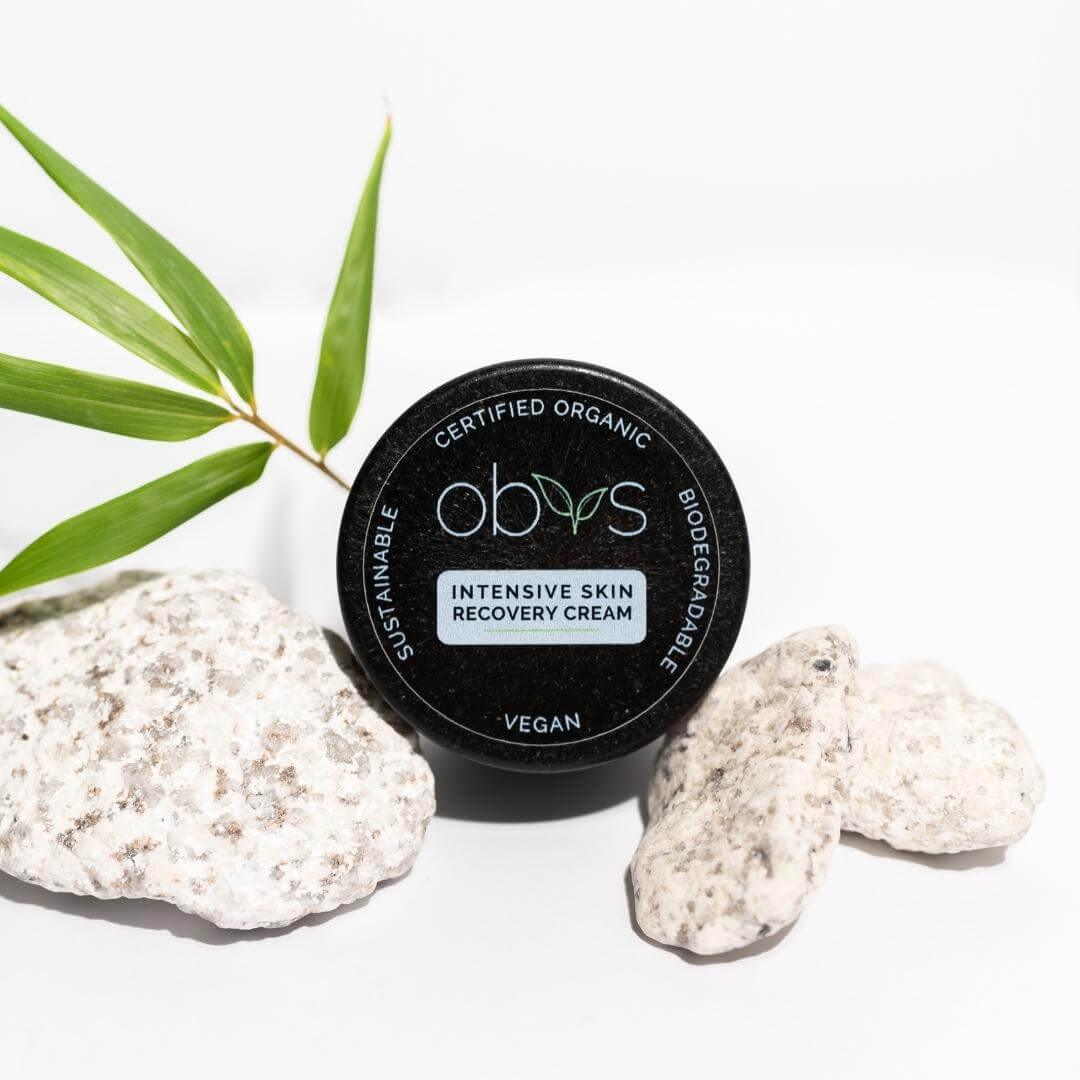
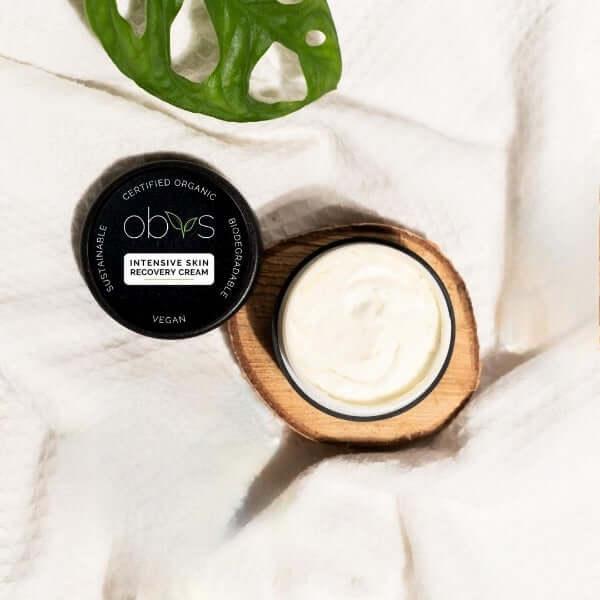
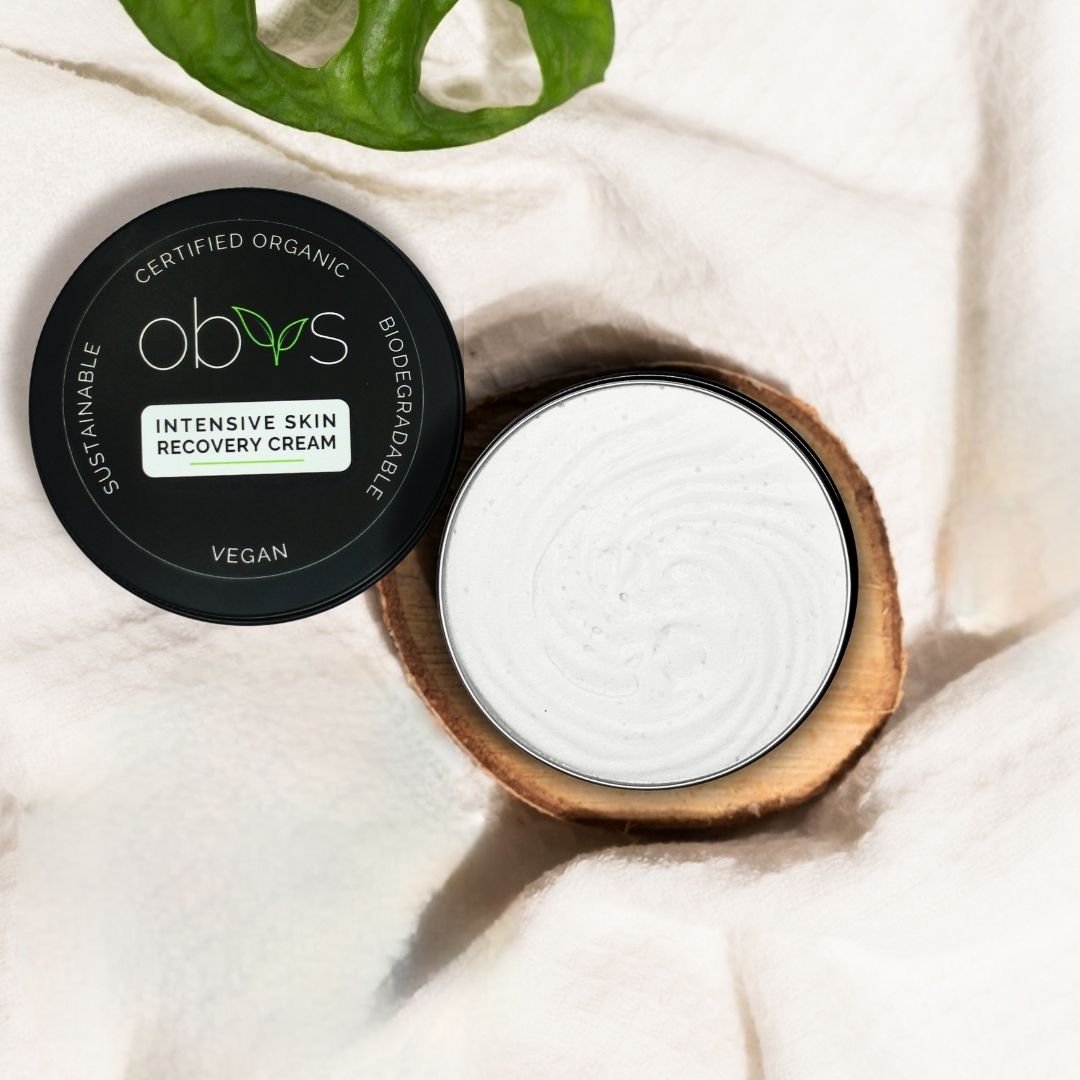
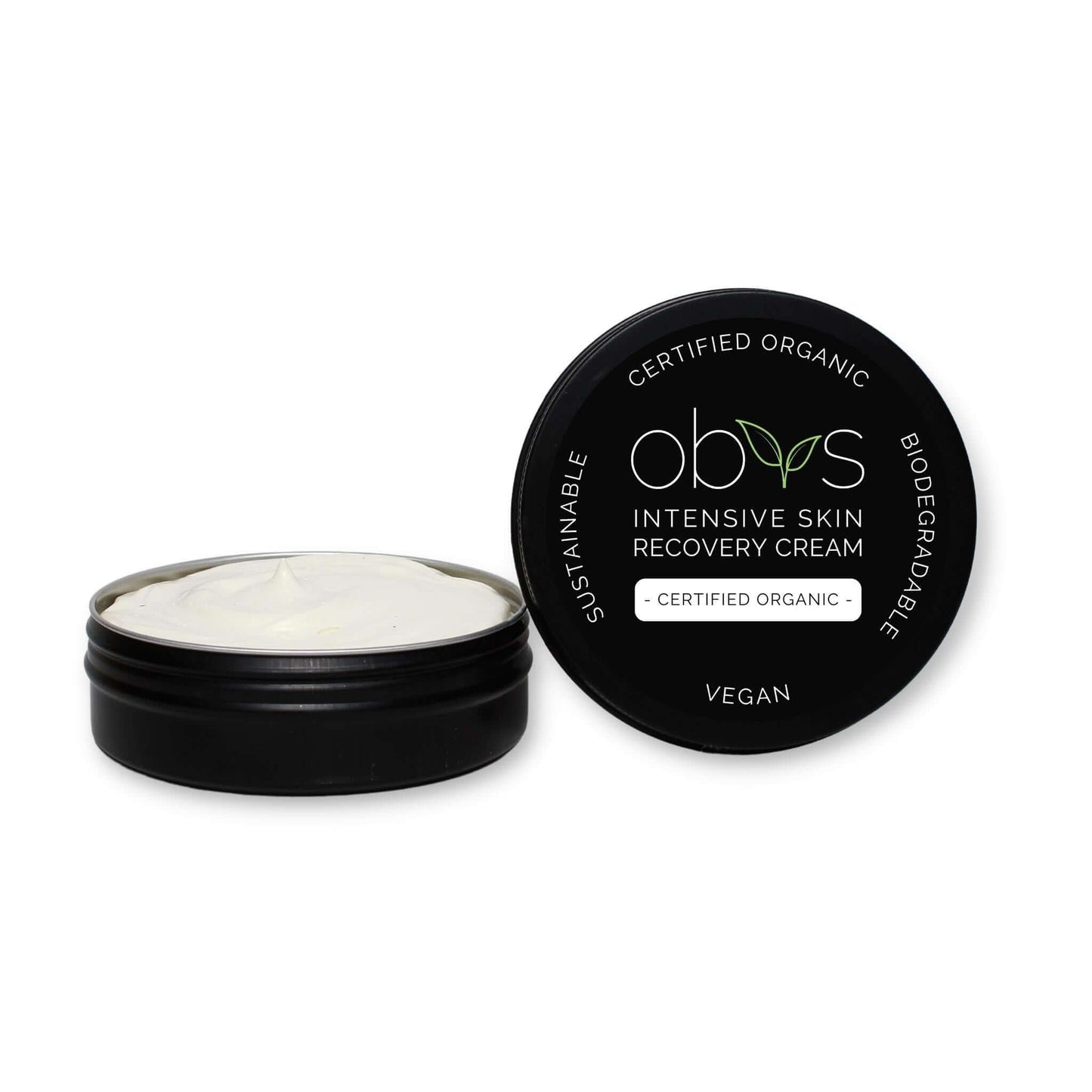
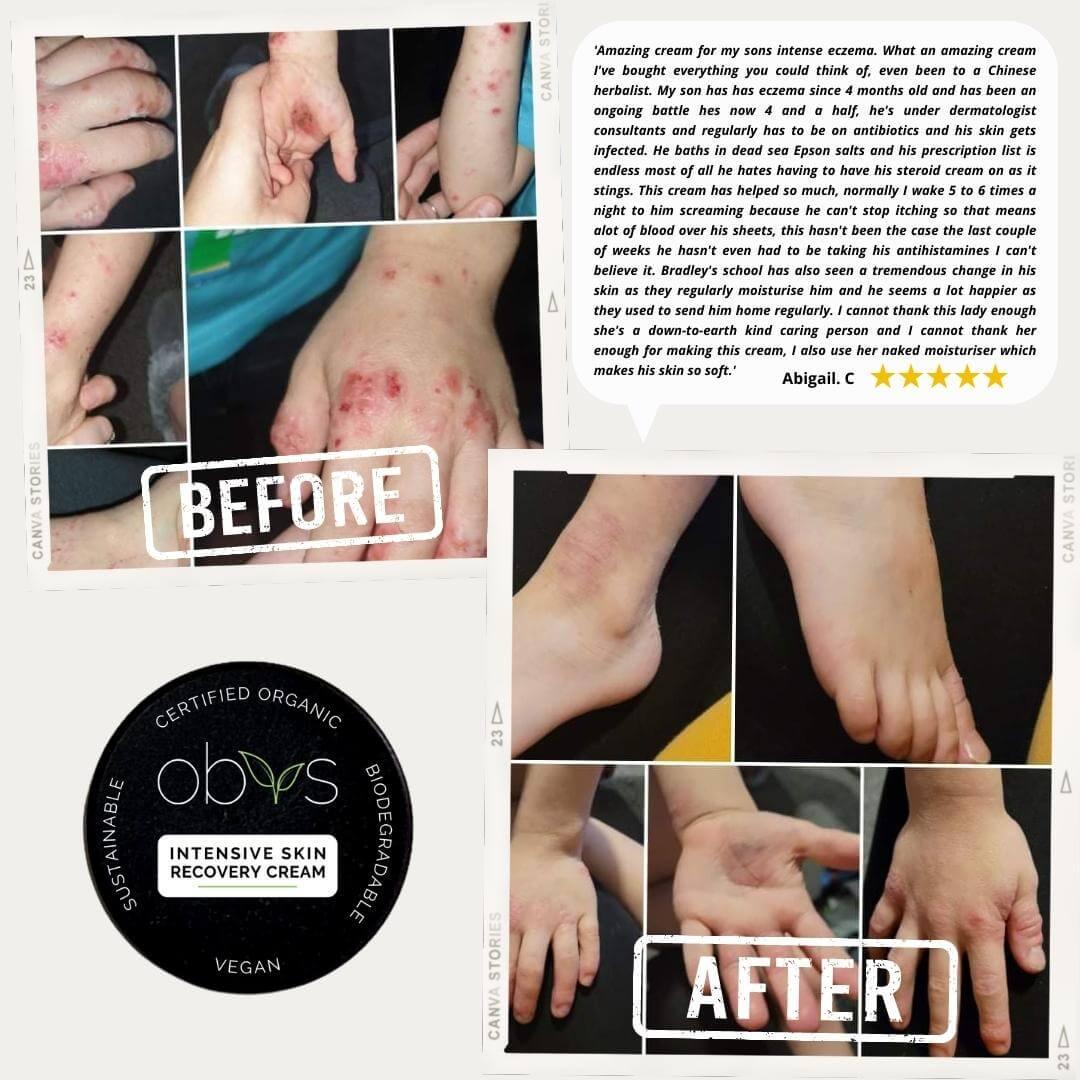
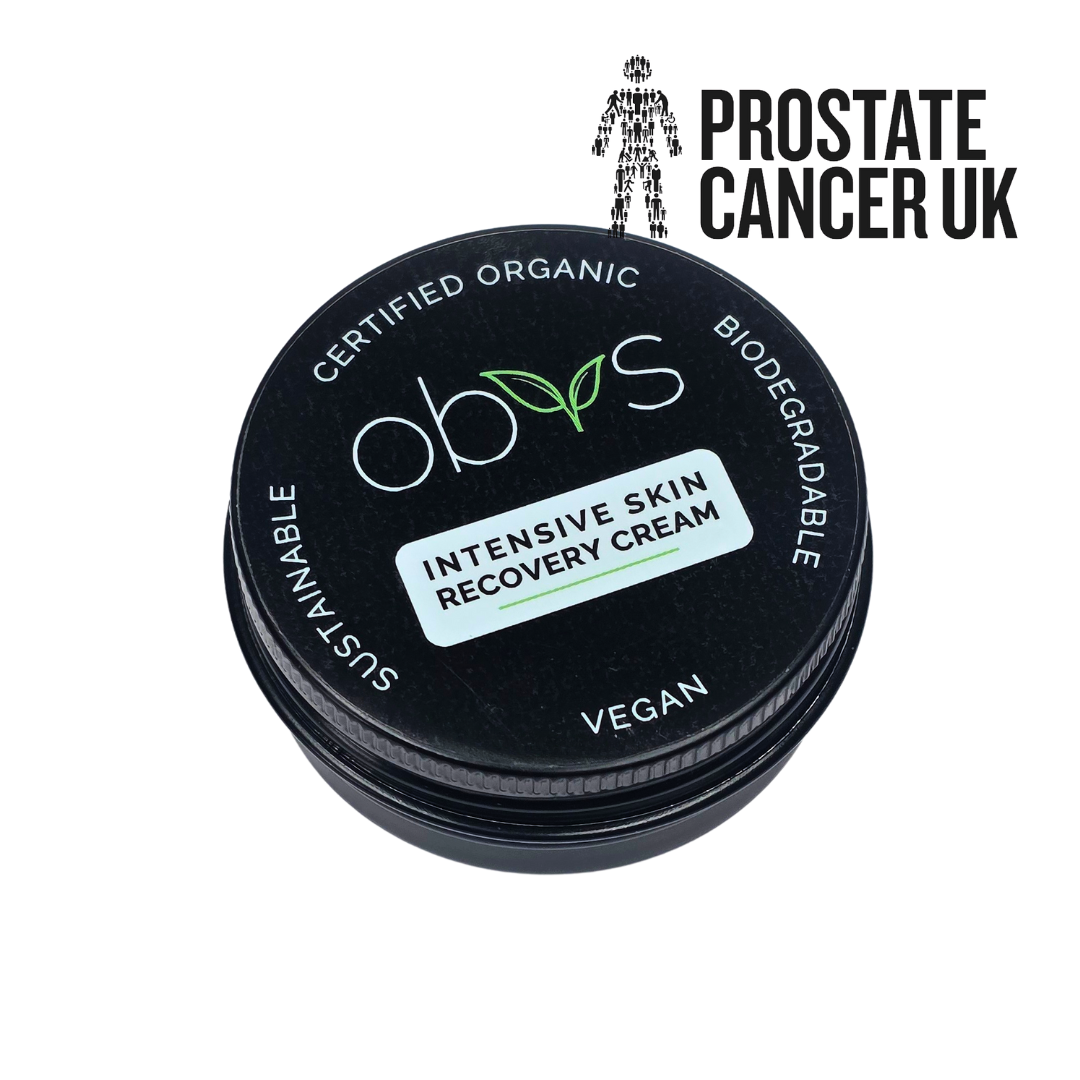
3. Intensive Skin Recovery Cream when your skin needs more
This is where ISRC earns its place.
You don't necessarily need a separate serum, overnight mask, barrier cream and recovery treatment.
ISRC is the richer treatment step.
Its formula includes:
- Organic shea butter
- Organic cold-pressed safflower seed oil
- Non-nano zinc oxide
- Organic arrowroot powder
- Vitamin E
The point isn't that you need to memorise that list.
The point is that these ingredients have been chosen to create a rich, protective treatment cream without filling the formula with unnecessary extras.
If your skin is feeling particularly dry or uncomfortable, you can use ISRC where you need it.
You don't have to cover your entire face in a thick layer every night.
Think targeted.
Think sensible.
Think what does my skin actually need today?
And what about rosehip oil?
You don't necessarily need to add an oil to your routine.
This is important.
If the Naked Moisturiser is doing exactly what you need, brilliant.
If you like using oils and want something nourishing to add to your routine, Obvs Organic Rosehip Oil is an option.
Rosehip oil contains a mixture of fatty acids and naturally occurring bioactive compounds. Research has looked at potential uses in areas including skin ageing, pigmentation, scarring and inflammatory skin conditions, although the strength of evidence varies and more human clinical research is needed.
That's the honest answer.
It's an interesting ingredient.
It's not a magic potion.
And you don't need to buy it just because someone on Instagram has told you that you absolutely must.
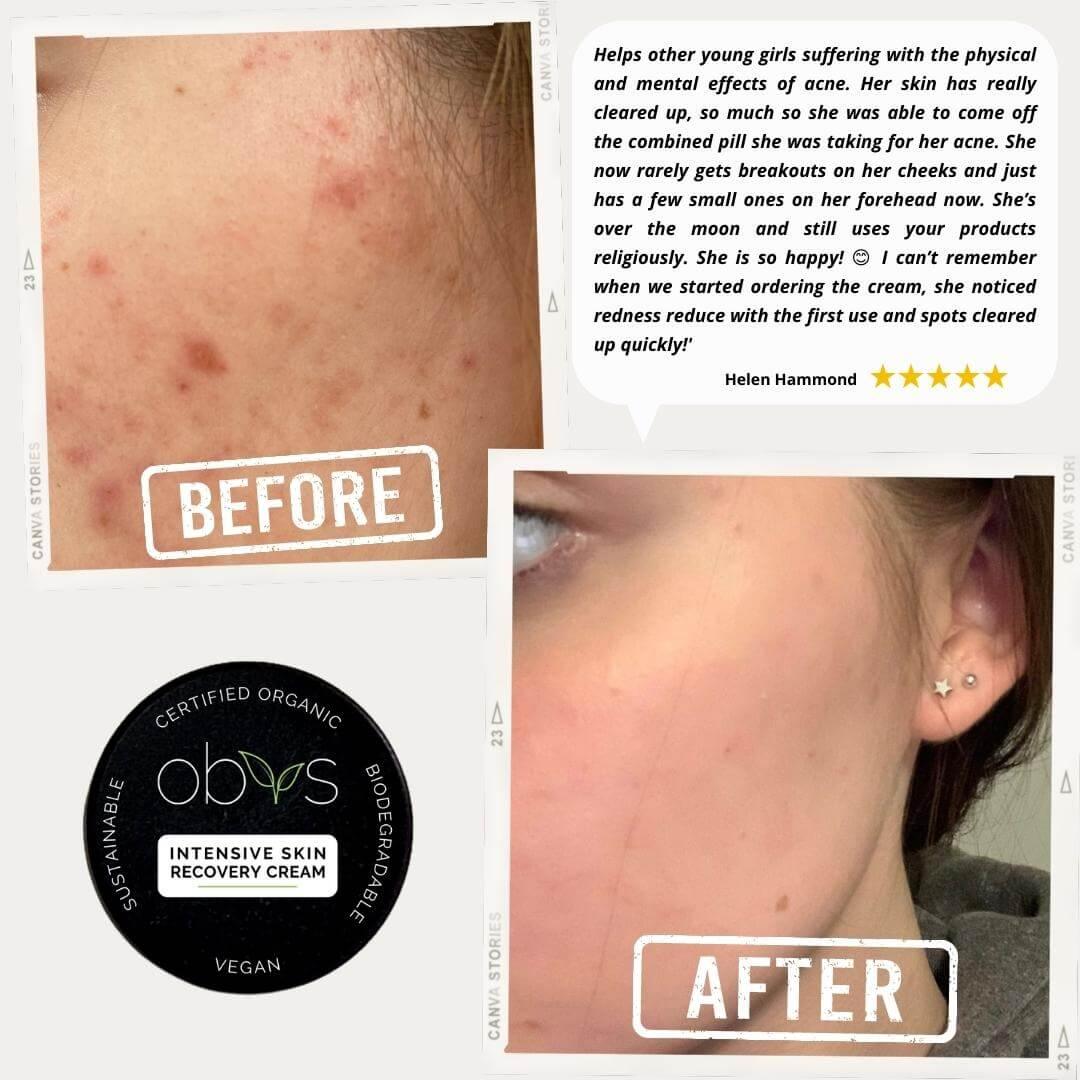
What about acne?
If you're acne-prone, don't automatically assume you need to strip your skin.
You can have acne and still need moisturisation.
You can have oily skin and still have a compromised barrier.
You can have dry skin and still have spots.
Your skin doesn't have to fit neatly into one category.
If you have persistent, painful, cystic or scarring acne, speak to your GP, pharmacist or dermatologist.
Skincare can support your skin alongside appropriate acne treatment.
It shouldn't pretend to replace medical treatment.
And if your acne treatment is making your skin very dry or irritated, a simple moisturising routine may help you tolerate your overall treatment better.
What if everything suddenly stings?
This is your cue to stop throwing products at the problem.
For a couple of weeks, simplify.
Try:
Morning
Cleanse if you need to.
Evening
Organic fragrance-free cleanser.
ISRC on areas that need more intensive care.
That's it.
No new acids.
No random TikTok serum.
No “miracle” peel you ordered at midnight.
Just consistency.
Then see what happens.
And yes, you still need SPF
If you're trying to improve your skin, daily sun protection deserves a place in the routine.
UV exposure contributes to photoageing, and randomised clinical evidence has shown that regular sunscreen use can reduce signs of skin ageing.
The Obvs Mineral SPF50 uses non-nano zinc oxide as its mineral UV filter and is formulated for broad-spectrum SPF50 protection.
This is important because there's a difference between an ingredient that has properties associated with UV protection and a finished product that has been formulated and tested to provide a specific SPF.
So use ISRC as a treatment cream.
Use the Obvs Mineral SPF50 when you want sun protection.
Different jobs.
Much less confusion.
The three-product experiment
If your skin is currently all over the place, I'd genuinely challenge you to try something.
For two weeks, stop trying to fix everything.
Use:
Organic Fragrance-Free Cleanser
↓
↓
And if certain areas need more intensive care:
That's your core routine.
Then observe your skin.
Does it feel less tight?
Are you getting fewer irritated patches?
Does your moisturiser stop stinging?
Does your makeup sit better?
Does your skin simply feel more comfortable?
Those are useful signs.
You don't need to take a photograph every morning under a ring light and analyse your pores at 400% zoom.
Your skin is allowed to simply feel better.
The skincare rule I'd give every woman in her 30s
Stop asking what your skin needs more of.
Start asking what might be irritating it.
That one change can completely alter the way you approach skincare.
You may not need another exfoliating acid.
You may not need another serum.
You may not need the £90 cream promising to turn back time.
You might need a gentle cleanser, a good moisturiser, a treatment cream when your skin needs extra help and daily SPF.
And if you want additional nourishment, you can add something like rosehip oil.
But you don't have to buy everything.
Good skincare shouldn't leave you feeling like you need a shopping list.
Your skin is remarkably good at telling you what it thinks.
You just have to stop shouting over it.
Want to simplify your routine?
Start with the basics.
Cleanse. Moisturise. Protect. Treat when needed.
That's it.
Have a look at the Obvs Organic Fragrance-Free Cleanser, Naked Moisturiser and Intensive Skin Recovery Cream and choose what actually makes sense for your skin.
You don't need 14 products.
You don't need to chase every ingredient trending on TikTok.
You don't need to spend a fortune trying to achieve “perfect skin”.
You need a routine you understand, ingredients you trust and products you will actually use.
Your skin doesn't need a 12-step routine. It probably needs a bit of peace and quiet.
Save a few bob with the Acne Bundle - Click Here
Scientific references
1. Fluhr JW, Moore DJ, Lane ME, Lachmann N, Rawlings AV. Epidermal barrier function in dry, flaky and sensitive skin: A narrative review. Journal of the European Academy of Dermatology and Venereology. 2024;38(5):812–820.
2. Draelos ZD, et al. Cleansing without compromise: the impact of cleansers on the skin barrier and the technology of mild cleansing. Cutis. 2004.
3. Ananthapadmanabhan KP, Moore DJ, Subramanyan K, Misra M, Meyer F. Cleansing without compromise: the impact of cleansers on the skin barrier and the technology of mild cleansing. Dermatologic Therapy. 2004.
4. Korting HC, Kober M, Mueller M, Braun-Falco O. Influence of repeated washings on the skin barrier. Research examining cleanser effects on skin barrier parameters.
5. Draelos ZD, Fowler J, Larsen WG, Hornby S, Walters RM, Appa Y. Tolerance of fragranced and fragrance-free facial cleansers in adults with clinically sensitive skin. Cutis. 2015;96(4):269–274.
6. Schmid-Wendtner MH, Korting HC. The pH of the skin surface and its impact on barrier function and skin health. Research review on skin cleansing and pH.
7. Lin TK, Zhong L, Santiago JL. Anti-Inflammatory and Skin Barrier Repair Effects of Topical Application of Some Plant Oils. International Journal of Molecular Sciences. 2018;19(1):70.
8. Oargă Porumb DP, Cornea-Cipcigan M, Cordea MI. Unveiling the mechanisms for the development of rosehip-based dermatological products: an updated review. Frontiers in Pharmacology. 2024;15:1390419.
9. Hughes MCB, Williams GM, Baker P, Green AC. Sunscreen and prevention of skin aging: a randomized trial. Annals of Internal Medicine. 2013;158(11):781–790.