
Coconut Oil vs Shea Butter for Acne: The Truth About Comedogenic Ingredients, Clogged Pores, and Clear Skin
Share
Coconut oil is breaking you out. Shea butter probably isn’t. Here’s the science.
There’s a reason your skin kicked off when coconut oil became your “natural skincare hack.” It wasn’t bad luck. It was chemistry.
I learned this the hard way. Acne, inflammation, confusion… all while thinking I was doing something “clean” and good for my skin.
Let’s strip it back properly, using dermatology and formulation science, not trends.
What “comedogenic” actually means (and where it came from)
“Comedogenic” refers to an ingredient’s tendency to cause comedones — blackheads and whiteheads formed when pores become blocked with sebum and keratin.
The commonly referenced comedogenic scale (0–5) originates from work by researchers like Albert M. Kligman, who studied acne cosmetica — breakouts triggered by topical products.
- 0 = non-comedogenic
- 1–2 = low likelihood
- 3 = moderate
- 4–5 = high likelihood
These ratings were largely derived from rabbit ear assays, later adapted to human models. Keep that in mind, because it matters later.
Coconut oil: why it clogs pores
Coconut oil consistently ranks around 4 out of 5 on the comedogenic scale in multiple dermatology references (including A Dictionary of Dermatology and cosmetic ingredient databases).
The fatty acid problem
Coconut oil is dominated by:
- Lauric acid (~45–50%)
- Myristic acid
- Palmitic acid
These are highly occlusive saturated fatty acids.
Sounds harmless. It isn’t.
What the research shows
- Acne-prone skin is deficient in linoleic acid, a key fatty acid that keeps sebum fluid and non-sticky (Downing et al., Journal of Investigative Dermatology, 1986).
- Low linoleic acid leads to thicker, more comedogenic sebum, increasing blockage risk.
- Applying oils low in linoleic acid (like coconut oil) can worsen this imbalance.
Coconut oil contains very little linoleic acid (~2%).
So instead of helping, it reinforces the exact lipid profile associated with acne.
Occlusion + impaired flow = congestion
Acne isn’t just about oil production. It’s about oil flow.
Coconut oil forms a semi-occlusive layer that can:
- Trap dead skin cells
- Slow sebum movement
- Increase microcomedone formation
This aligns with findings on acne cosmetica from Kligman’s early work and later reviews in Journal of the American Academy of Dermatology.
Important nuance
Lauric acid does have antimicrobial activity against Cutibacterium acnes (Nakatsuji et al., 2009).
That’s often used to defend coconut oil.
But killing bacteria doesn’t cancel out pore blockage. In real-world use, clogging wins.
Shea butter: wrongly accused
Shea butter sits around 0–2 on the comedogenic scale, depending on the source.
That alone puts it in a completely different category.
So why do people panic about it?
Because it’s thick.
That’s it.
Thickness ≠ comedogenicity.
The chemistry of shea butter (this is where it gets interesting)
Shea butter (from Vitellaria paradoxa) has a very different lipid structure:
- Stearic acid (~30–50%)
- Oleic acid (~40–60%)
- Linoleic acid (~3–11%)
- Unsaponifiable fraction (bioactive compounds)
Why this matters
1. Barrier repair
Stearic acid plays a role in reinforcing the stratum corneum, helping reduce transepidermal water loss (TEWL).
A compromised barrier is a known contributor to acne severity (Dreno et al., European Journal of Dermatology, 2018).
2. Anti-inflammatory activity
Shea butter contains triterpene esters with demonstrated anti-inflammatory effects (Akinwale et al., Journal of Oleo Science, 2017).
Inflammation drives acne lesions. Reducing it matters.
3. Supports lipid balance
While not high in linoleic acid, shea butter doesn’t disrupt lipid balance the way coconut oil does.
It works with the skin barrier, not against it.
“But it’s still a butter…”
This is where most skincare advice falls apart.
The comedogenic scale has limitations
- Based on isolated ingredients, not finished formulations
- Originally tested on rabbit ears, which are more sensitive than human skin
- Doesn’t account for concentration, delivery system, or formulation synergy
A 1989 review in Journal of the Society of Cosmetic Chemists highlighted how real-world outcomes differ significantly from raw ingredient testing.
Formulation changes everything
A properly formulated product:
- Balances oils with humectants and emulsifiers
- Controls absorption rate
- Prevents pore occlusion
Rubbing neat coconut oil on your face is not comparable to a well-formulated moisturiser.
Acne-prone skin isn’t what you think
Most people treat acne as an “oil problem.”
It’s not.
It’s a barrier + inflammation + follicular blockage problem.
Research consistently shows acne-prone skin has:
- Increased TEWL (weakened barrier)
- Altered lipid composition
- Chronic low-grade inflammation
(International Journal of Cosmetic Science, 2019 review)
Stripping oils or avoiding all emollients makes this worse.
Skin compensates by producing more sebum, not less.
Why shea butter works in acne formulations
When used in the right formulation, shea butter:
- Reduces water loss without suffocating skin
- Supports barrier repair
- Calms inflammation
- Has low comedogenic risk compared to coconut oil
It provides what acne-prone skin actually needs:
support without stagnation
Coconut oil vs shea butter: side-by-side
| Feature | Coconut Oil | Shea Butter |
|---|---|---|
| Comedogenic rating | ~4 | 0–2 |
| Linoleic acid | Very low | Low–moderate |
| Occlusivity | High, can trap sebum | Balanced, breathable in formulations |
| Barrier support | Limited | Strong |
| Inflammation support | Minimal | Anti-inflammatory compounds |
| Acne suitability | High risk | Generally suitable (when formulated) |
Where formulation matters (and where I stand)
I don’t formulate based on trends or what sounds “natural.”
I formulate based on skin biology and clinical evidence.
Every Obvs product:
- Moisturisers
- Cleansers
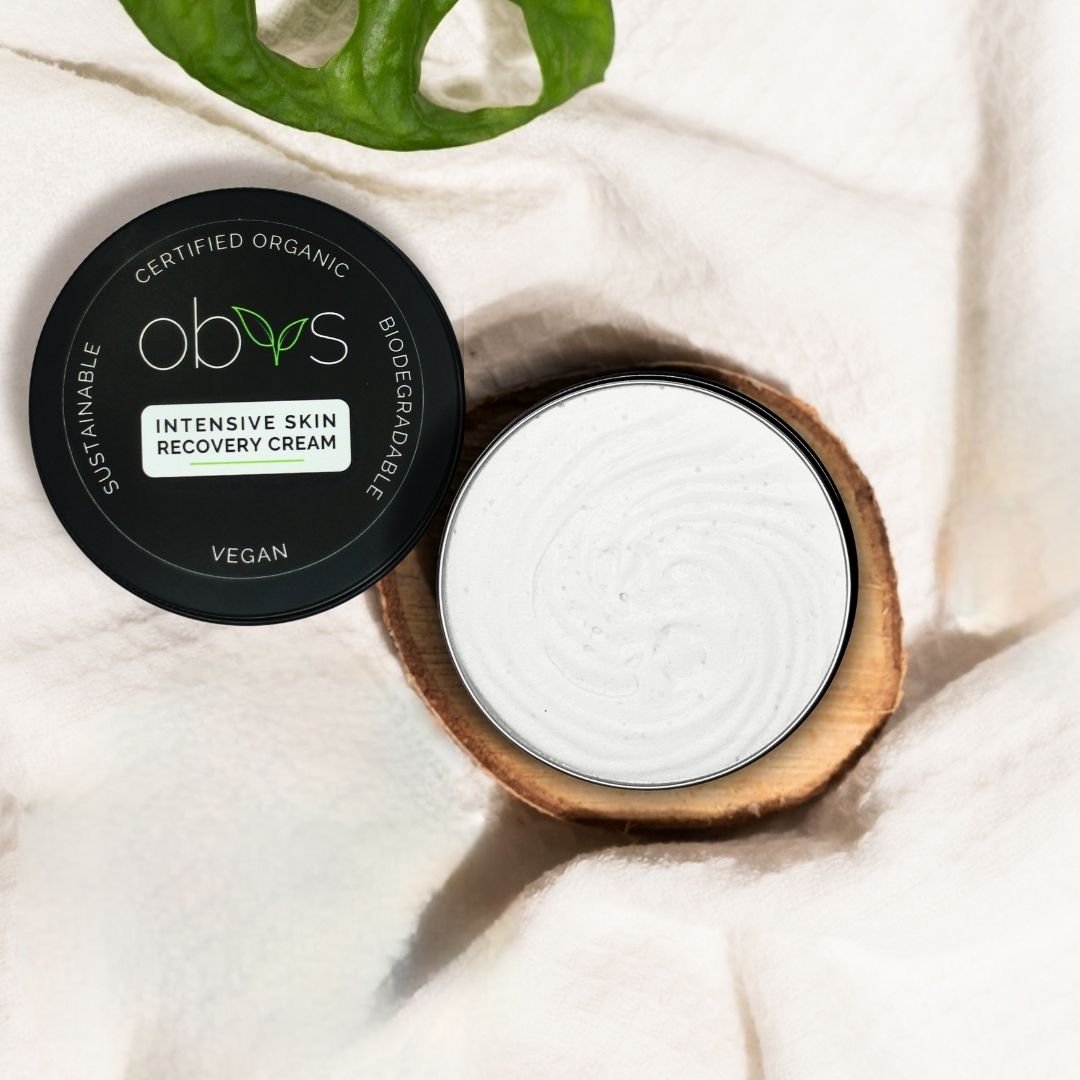
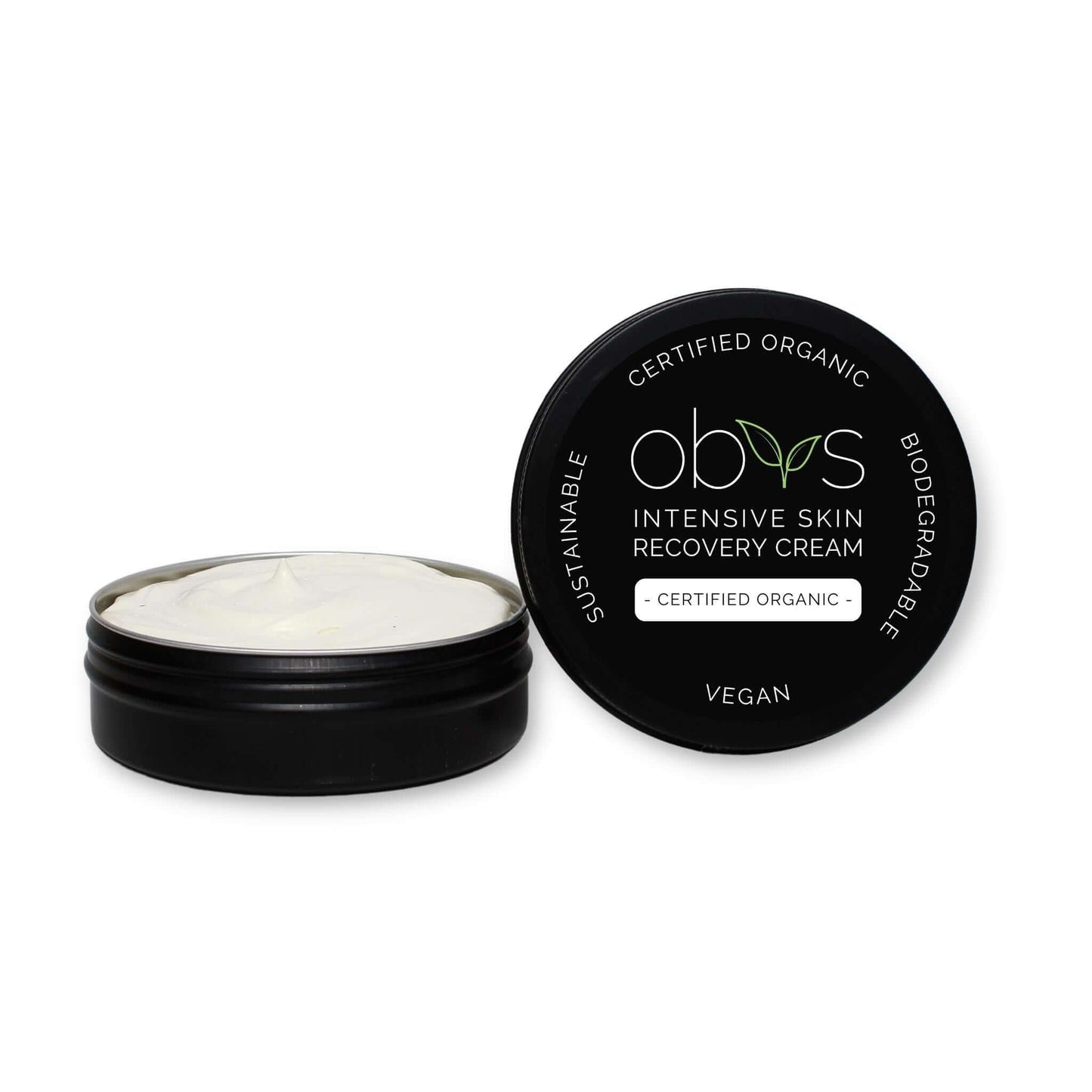
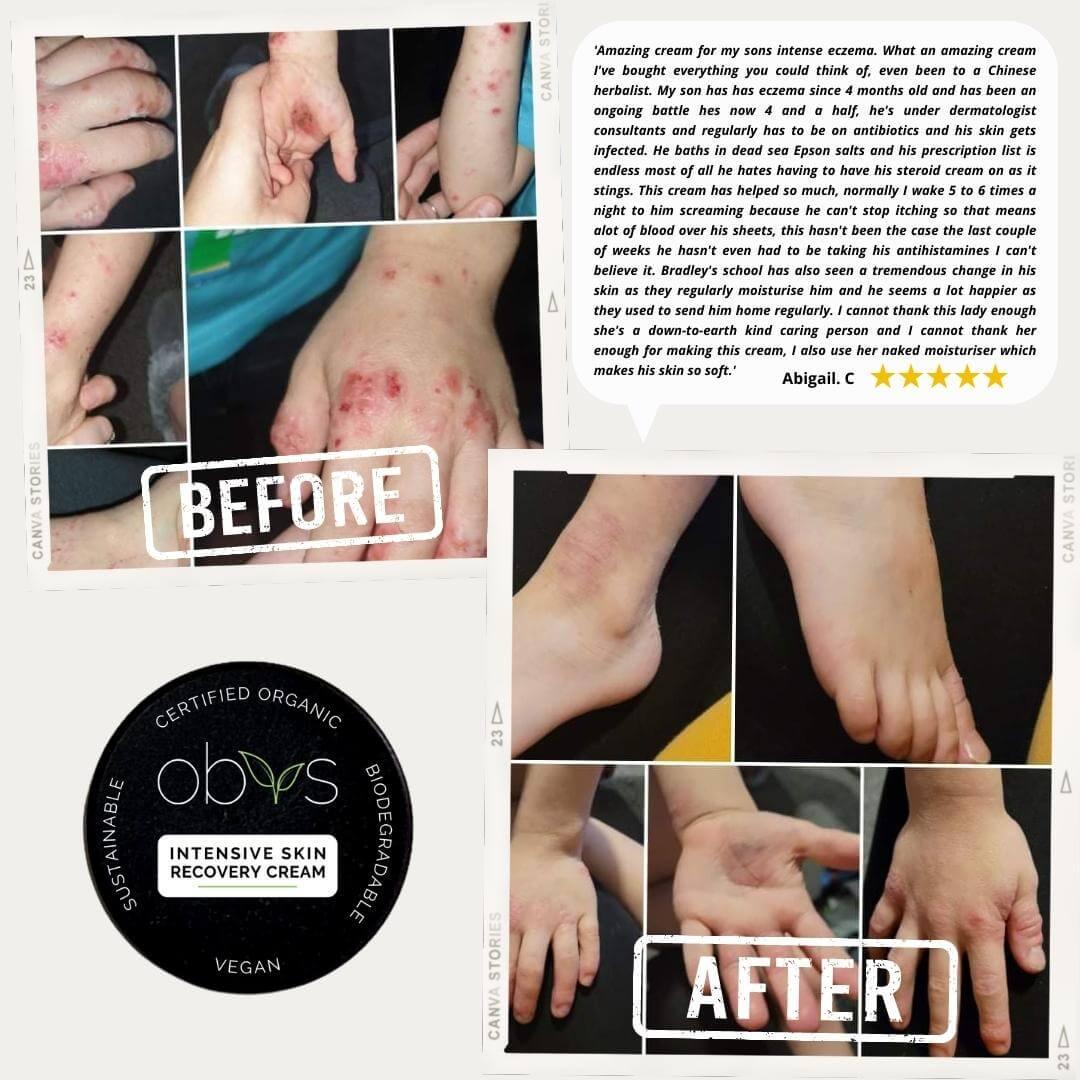
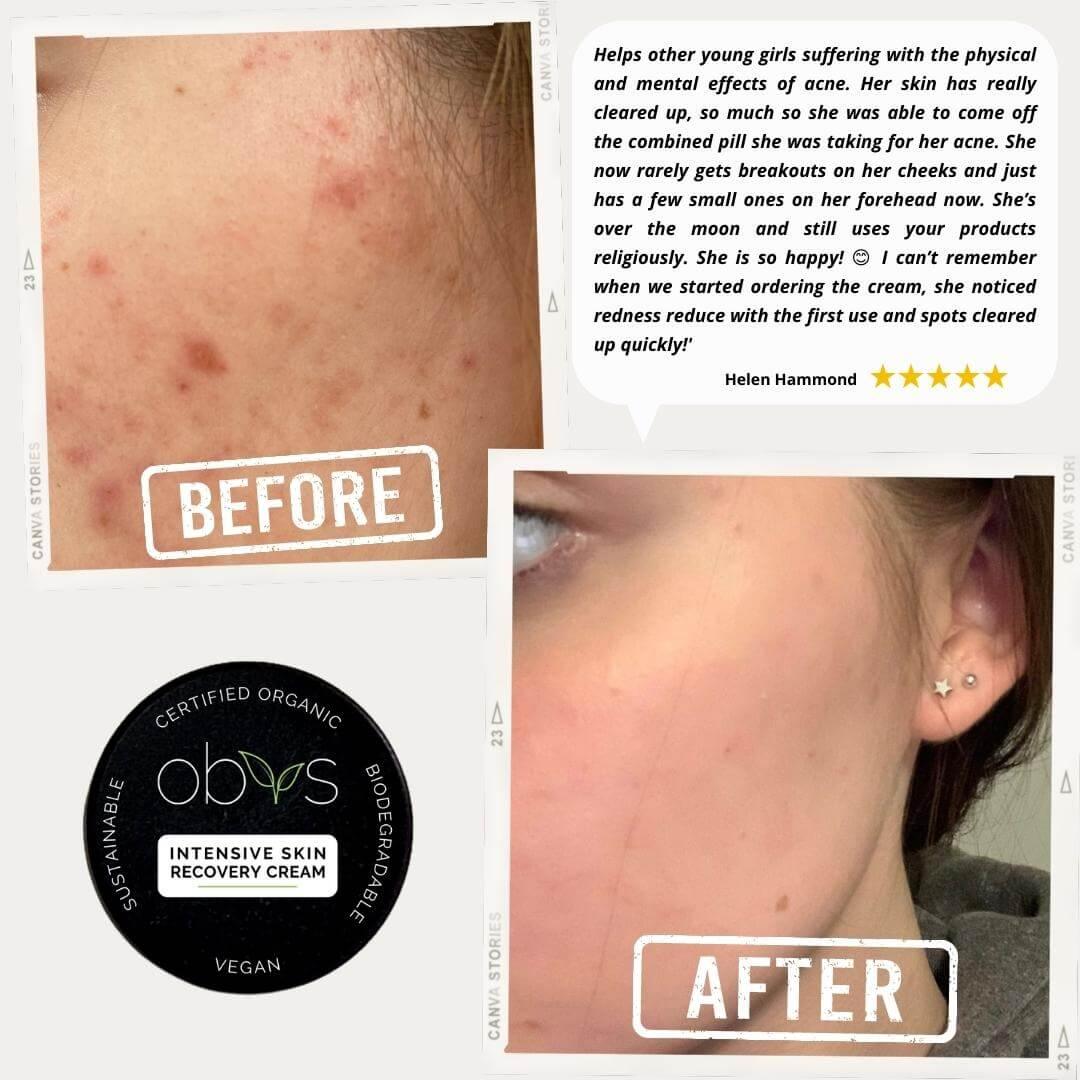
- Intensive Skin Recovery Cream
Uses organic shea butter as a base.
No coconut oil. Not a drop.
Because I’m not interested in ingredients that market well.
I’m interested in ingredients that behave properly on skin.
Final thought
If your acne is getting worse and nothing makes sense, look at your ingredients before you blame your hormones.
Coconut oil has built a reputation it doesn’t deserve in facial skincare.
Shea butter has taken the blame for problems it didn’t cause.
Time to swap them back where they belong.